
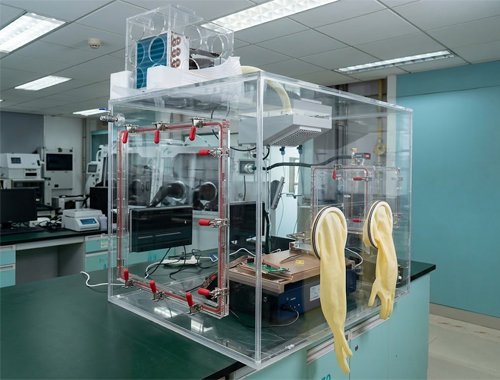
If you are working with moisture-sensitive, oxygen-sensitive, or temperature-dependent materials, you already know that a standard environment just won’t cut it. Whether it’s lithium-battery R&D, specialized chemical synthesis, or medical device packaging, controlling the atmosphere is only half the battle.
The real challenge? Managing the thermal environment without compromising visibility or isolation.
This is where a Temperature-Controlled Acrylic Glove Box becomes an indispensable asset for your lab or production line. But why acrylic, and how does temperature control actually integrate into these systems? Let’s break down what you need to know to get the exact setup for your application.
While stainless steel glove boxes are great for heavy-duty, high-vacuum industrial processes, they have a major downside: you are looking through a small window.
Acrylic (PMMA) glove boxes offer 360-degree optical clarity. This is a game-changer when you are performing intricate manual tasks, setting up complex analytical balances, or monitoring chemical reactions that change color or state.
Important Technical Note: Acrylic has physical limits. It is ideal for positive pressure or slight negative pressure applications. If your process requires a deep, hard vacuum (below 1 Torr), you will want to look at our [Vacuum Degassing Chambers] or specialized steel glove boxes rather than full acrylic main chambers.
Many materials are highly sensitive to thermal fluctuations. If your ambient lab temperature swings by just a few degrees, it can ruin a batch of polymers or alter the curing time of an aerospace adhesive.
Integrating a temperature control system directly into an acrylic glove box allows you to lock in precise conditions.
We build and supply these systems for industries where precision is non-negotiable:
Before you request a quote, make sure you have mapped out these project requirements:
Standard acrylic can comfortably handle continuous temperatures up to 60°C to 70°C (140°F - 158°F). If your process requires higher heat, we need to look at alternative materials like polycarbonate or high-temperature glass viewing panels.
If you need to maintain oxygen levels below 10 ppm, pair your temperature-controlled box with an automated gas purge controller and an oxygen/moisture sensor.
Many users integrate a small, dedicated aluminum or stainless steel vacuum degassing chamber inside or attached to the side of the acrylic glove box. This allows you to pull a hard vacuum on your epoxies or solvents first, then transfer them directly into the inert, temperature-controlled glove box environment without exposing them to ambient air.
Think about what goes inside. Do you need internal power outlets, USB data ports, or liquid feedthroughs? It is always easier (and cheaper) to build these into the design from day one than to retrofit them later.
At Vacuumdegassing.com, we don’t believe in one-size-fits-all lab equipment. Every process has its own quirks, space constraints, and budget realities.
Whether you need a benchtop unit with basic heating or a multi-station glove box integrated with a heavy-duty vacuum degassing cycle, our engineering team can help you design it.
Ready to discuss your project? [Contact our application engineers today] with your temperature requirements and chamber dimensions, and we’ll provide a detailed technical proposal.