Have you ever wondered how scientists simulate outer space on Earth, or how manufacturers create perfectly bubble-free epoxy resins? The secret lies in a highly specialized piece of equipment: the vacuum chamber.
Whether you are a student, a hobbyist, or an industrial engineer, understanding what a vacuum chamber is and how it functions can open up a world of scientific and manufacturing possibilities. Here is a deep dive into everything you need to know.
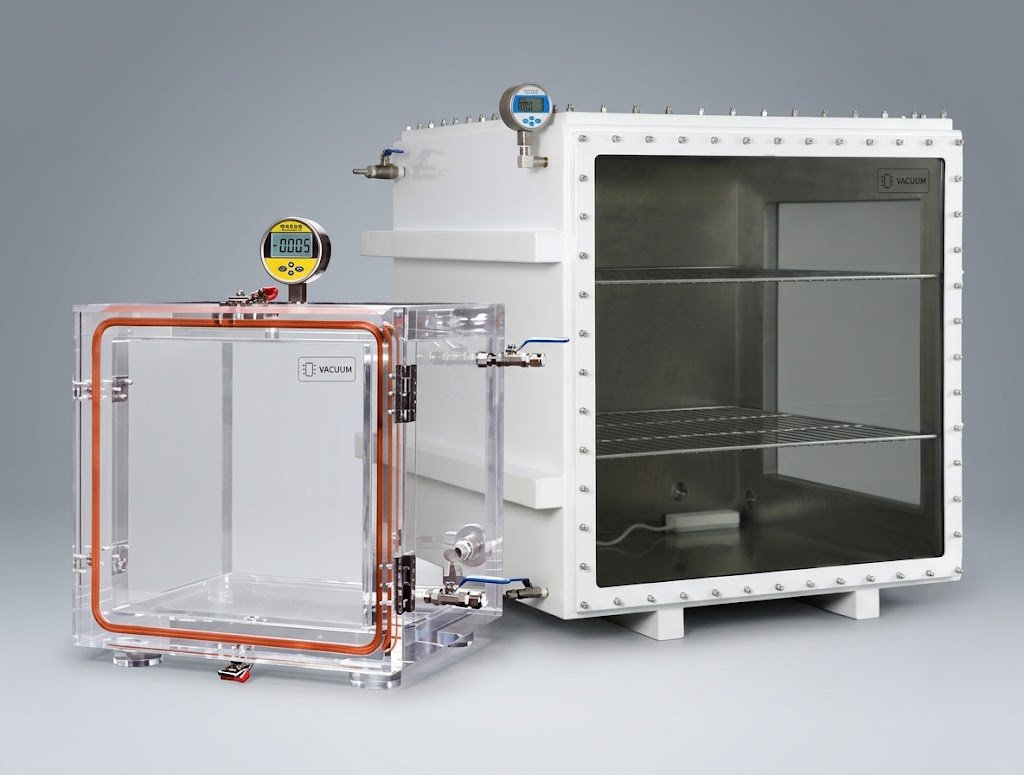
At its simplest, a vacuum chamber is a rigid enclosure from which air and other gases are removed by a vacuum pump. This creates a low-pressure environment inside the sealed vessel, commonly referred to as a vacuum.
While it is practically impossible to achieve a perfect vacuum—meaning a space absolutely devoid of all matter—modern vacuum chambers can achieve incredibly low pressures that closely mimic the harsh, airless environment of deep space.
A functional vacuum setup requires more than just the container itself. It typically consists of a synchronized system:
To understand how a vacuum chamber works, you have to think about the air around us. Right now, we live at the bottom of an "ocean" of air, which exerts constant atmospheric pressure on everything it touches.
When you place an object inside a vacuum chamber and turn on the pump, the process is straightforward:
A classic physics example: If you place a glass of room-temperature water inside a vacuum chamber and lower the pressure enough, the water will actually start to boil without heating up. This happens because lowering the environmental pressure lowers the liquid's boiling point.
Depending on the specific application, vacuum chambers come in various shapes, sizes, and materials to handle different pressure levels:
Vacuum chambers are crucial tools across a massive range of industries, from everyday manufacturing to cutting-edge aerospace engineering.
For DIY creators and industrial manufacturers alike, air bubbles are the enemy of a perfect mold. Vacuum chambers are widely used to "degas" silicone, epoxy, and polyurethane resins. By placing the liquid mixture in the chamber, the vacuum forces trapped air bubbles to expand, rise to the top, and burst, leaving behind a flawless, crystal-clear final product.
How do space agencies test satellites, rovers, and spacesuits before launching them into orbit? They use massive thermal vacuum chambers. These chambers simulate the near-perfect vacuum and extreme temperature fluctuations of outer space to ensure equipment won't fail in the void.
Vacuum chambers play a vital role in the freeze-drying process. By freezing food and then placing it under a deep vacuum, the moisture sublimates—meaning it turns directly from solid ice into water vapor without melting into liquid. This preserves the food's structure, flavor, and nutrients for decades.
The microchips inside your smartphone and computer require an incredibly clean environment to be manufactured. Vacuum chambers prevent airborne dust, moisture, and chemical contaminants from ruining delicate silicon wafers during the etching and coating processes.
From the food we eat to the technology we rely on every day, vacuum chambers quietly shape the modern world. By stripping away the air we take for granted, these devices allow scientists and creators to manipulate materials in ways that would otherwise be physically impossible.
Whether you are looking to buy a small desktop chamber for your resin crafts or researching the physics of pressure, understanding what a vacuum chamber is highlights just how much control we have over the environments we build.ptimize your production workflow today.
Contact us to get the vacuum chamber! www.vacuumdegassing.com