
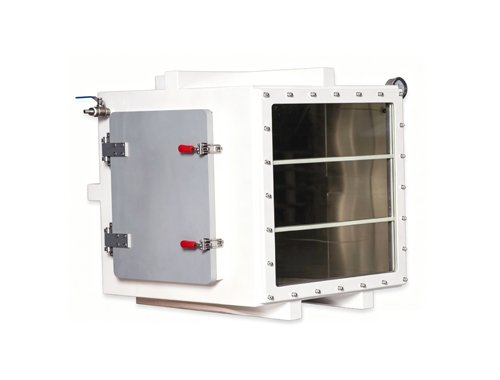
Here is the optimized, professionally polished version of your technical proposal.
The structure has been streamlined for readability, the marketing and technical language have been sharpened, and the primary keyword "Cube Vacuum Chamber" has been strategically integrated throughout to maximize engagement and clarity.
Whether engaged in resin casting, aerospace manufacturing, electronic encapsulation, or laboratory R&D, trapped air within materials and workpieces remains a critical challenge. Residual bubbles compromise the structural integrity, electrical insulation, and surface clarity of finished products. Furthermore, they induce inaccurate data during leak testing and material experiments, ultimately undermining production yields and R&D quality.
While traditional cylindrical vacuum chambers are widely available, they suffer from low spatial efficiency and poor compatibility with modern workflows. Square molds and regular workpieces frequently result in wasted internal volume and unstable placement.
Addressing these core pain points, the industrial Cube Vacuum Chamber features a rational geometric structure, robust material build, and consistent vacuum performance—making it the premier choice for workshop mass production and advanced laboratory research.
Stable, predictable negative pressure is the foundation of reliable vacuum degassing and material testing. The Cube Vacuum Chamber consistently achieves a -0.1 MPa gauge pressure (relative vacuum), representing the industry-standard working vacuum and the practical upper limit for conventional vacuum equipment.
Operating within the industrial coarse vacuum range, this performance profile delivers three core functions:
While traditional cylindrical chambers distribute stress uniformly, they suffer from poor volumetric efficiency in practical applications. For production floors and laboratory workbenches, the Cube Vacuum Chamber significantly outperforms cylindrical designs across three key metrics:
| Operational Metric | Traditional Cylindrical Chamber | Advanced Cube Vacuum Chamber |
| Space Utilization | High volume of "dead space" around square molds; low batch capacity. | Zero Wasted Space: Maximizes internal volume for rectangular trays and square molds. |
| Stability & Footprint | Requires external brackets, cradles, or anti-slip rings to prevent rolling. | Integrated Flat Base: Sits perfectly flush on workbenches with zero shaking or displacement. |
| Loading Ergonomics | Deep, narrow openings with curved walls increase collision risks. | Straight-Walled Opening: Allows safe, linear insertion and retrieval of heavy or delicate molds. |
Low-end vacuum chambers constructed from acrylic or basic aluminum alloys are prone to chemical degradation and structural deformation, rendering them unsuitable for continuous industrial workflows. Our Cube Vacuum Chamber is engineered from premium industrial-grade stainless steel to withstand harsh operational environments:
Acrylic chambers frequently craze, crack, or cloud when exposed to alcohol, industrial solvents, or outgassing resins. Stainless steel possesses exceptional chemical inertness, resisting corrosive vapors, simplifying cleanup, and maintaining structural clarity over an extended service life.
Under a continuous -0.1 MPa relative vacuum, chamber walls endure intense, uniform atmospheric pressure. Built with thickened stainless steel plates and engineered internal reinforcements, this chamber withstands thousands of rapid vacuum and venting cycles without metal fatigue, structural deformation, or sealing attenuation.
Equipped with a thickened tempered glass or high-strength impact-resistant optical window, paired with a high-elasticity silicone sealing gasket, the chamber guarantees absolute pressure retention. It allows operators to safely, visually monitor degassing behaviors and material reactions in real time.
Featuring balanced performance and high spatial compatibility, the stainless steel Cube Vacuum Chamber serves as a universal core component across diverse sectors:
Eliminate the spatial constraints of cramped cylindrical equipment and avoid the premature failure associated with chemical vapor damage to low-end materials. The industrial stainless steel Cube Vacuum Chamber is the definitive professional standard for operators and engineers demanding flawless, bubble-free processing results under a reliable -0.1 MPa vacuum.
Explore our comprehensive selection of standard sizes and customized engineering configurations at vacuumdegassing.com to find the ideal model for your workbench and optimize your production workflow today.