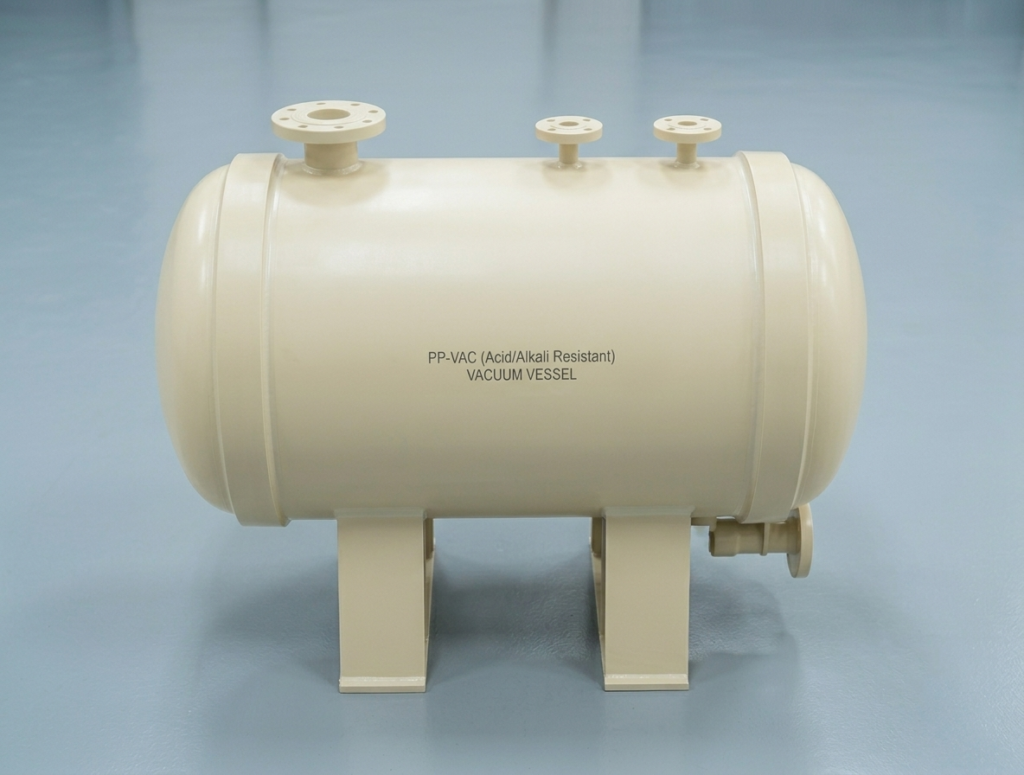
A while back, we needed to degass some fairly aggressive solutions – dilute sulfuric acid, hydrochloric acid, and also some caustic sodium hydroxide baths. We looked around at different vacuum chamber options.
We ended up with a polypropylene (PP) chamber. It wasn’t the prettiest, but it turned out to be a workhorse. Over the last few years, that same chamber has handled hundreds of cycles with all kinds of corrosive liquids. No cracks, no leaks, no drama.
This post is about why PP works well for acid and alkali degassing, how to use it safely, and a few things we wish we’d known from the start.
Polypropylene is a common plastic, but not all plastics are equal when it comes to chemical resistance. PP stands out because:
The main trade‑off is transparency. PP is translucent white, not crystal clear. You can see the liquid level and bubble activity, but not as sharp as glass or acrylic. For most degassing work, that’s fine.
Other materials have their own strengths. Glass is great for high purity and visibility but fragile. Stainless steel handles high temperatures well. Acrylic is clear and affordable for neutral solutions. For corrosive liquids, PP is a very practical choice.
Here are some actual examples from our work and from people we know:
Dilute sulfuric acid – used in wastewater pretreatment and some metal finishing steps. Degassing removes dissolved air that can interfere with downstream processes.
Hydrochloric acid – we degas HCl solutions before certain analytical measurements. The vapor is aggressive, but PP plus a good seal handles it.
Sodium hydroxide (caustic) solutions – degassing 5‑10% NaOH for a cleaning process. PP doesn’t mind bases at all.
Mixed lab wastes – sometimes a mix of nitric, sulfuric, and a little HF. As long as it’s not hot and concentrated, PP holds up well.
Electroplating baths – both acidic and alkaline baths benefit from degassing. Removing micro‑bubbles reduces pitting on plated parts.
Resin casting – some epoxy or polyurethane resins use acidic hardeners. A few minutes under vacuum pulls out trapped air bubbles.
Not every PP chamber is the same. After a few bad experiences, we have a simple checklist.
Wall thickness or reinforcement – Thin walls (under 8‑10 mm) can bow inward under full vacuum. The chamber might not break, but the distortion stresses the plastic. Look for walls at least 10‑12 mm thick, or external ribs. Many quality chambers have a ribbed design for extra strength.
The seal material – This matters more than you think. Some chambers come with a black Buna‑N (nitrile) O‑ring. Nitrile is fine for many chemicals, but for acid and alkali vapor, it can harden and crack over time. We switched to Viton (FKM) seals and they last much longer. For really harsh conditions, PTFE‑encapsulated seals are also an option.
Valve material – Brass valves can corrode slowly when exposed to acid vapor. Look for PTFE or polypropylene body valves. Some chambers include a small PTFE needle valve – that’s good.
Ports – Standard 1/4” or 3/8” ports are fine. Make sure the fittings are plastic or PTFE, not brass.
Transparency – Accept that you won’t get crystal clear view. You’ll see bubbles and liquid level through the translucent wall. If you absolutely need a clear lid, some manufacturers offer a PP chamber with a small acrylic window (sealed properly). We’ve never needed that.
This is our routine. Works for both acids and alkalis.
That’s it.
Cold trap is worth it. Acid or alkali vapor will eventually get into your vacuum pump and contaminate the oil. We added a simple cold trap (dry ice + acetone, or even a glass trap in a freezer) between the chamber and pump. Pump oil lasts much longer now.
Don’t leave the chamber clamped shut. If you store it with the lid clamped tight, the O‑ring takes a compression set. After a few months, it may not seal properly. Now we always loosen the clamps or remove the lid when not in use.
Watch the temperature. PP softens above about 80°C (176°F). If you degas warm solutions, keep the temperature well below that. Hot PP under vacuum can deform.
Check the chamber regularly. Once a month, pull a full vacuum and listen for hissing leaks. Shine a bright light through the walls to look for stress cracks or whitening. If you see cracks, retire the chamber.
Know the limits. PP is not for everything. Hot concentrated nitric acid, chromic acid, or strong oxidizing mixtures can attack it. Always check a chemical compatibility chart for your specific solution.
We keep a small log. It takes maybe five minutes a month.
| Material | Good for | Limitations |
|---|---|---|
| PP | Acids, alkalis, general corrosive degassing | Translucent, temperature limit ~80°C |
| Acrylic | Neutral solutions, good clarity | Not for strong acids or bases |
| Stainless steel | High temperature, high vacuum | Heavier, more expensive, some chemical limits |
| Glass | High purity, visibility | Fragile, small sizes often |
| PVDF | Very harsh chemicals, high temp | Expensive |
Each material has its place. For routine acid and alkali degassing at reasonable temperatures, PP is a solid, cost‑effective choice.
We bought ours from vacuumdegassing.com. They offer a ribbed PP series that comes with a Viton O‑ring (which saved us the trouble of replacing it ourselves). Sizes from 150mm to 400mm diameter. You can also order extra ports.
Not a sponsored post. We just like things that work.
Degassing corrosive solutions doesn’t have to be complicated. A polypropylene vacuum chamber, a Viton seal, and a cold trap will handle most acidic and alkaline degassing tasks reliably for years.
It’s not the flashiest tool in the lab, but it gets the job done. And after you’ve used one for a while, you’ll probably wonder why you waited so long.
If you have questions about your specific application – chemical type, concentration, temperature – feel free to reach out through our contact page. We’re happy to share what’s worked for us.
Need a PP chamber for your acid or alkali degassing? Check the current options at vacuumdegassing.com.